

Buzzing stocks
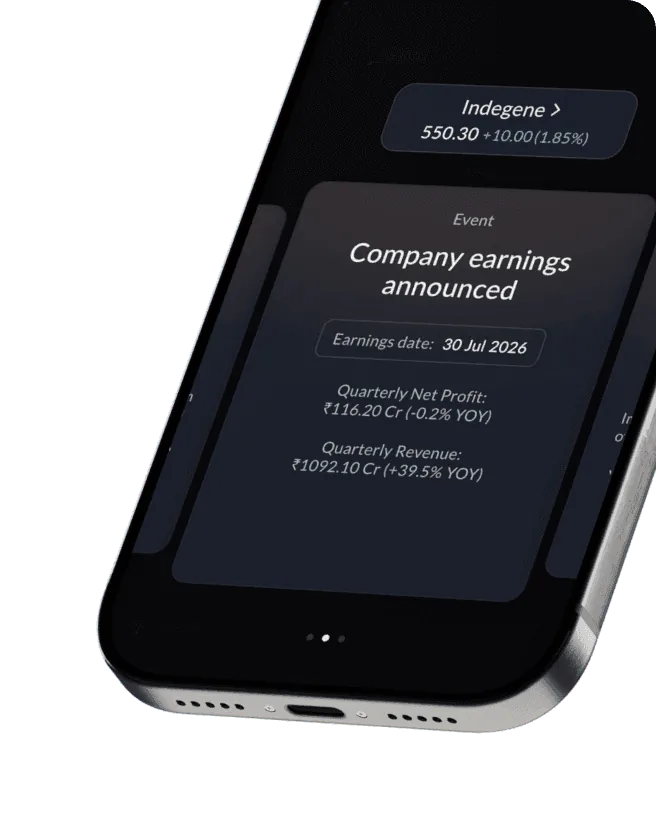
- Sudden volume spikes
- Highs & lows
- RSI breakouts and other technical triggers
- Real-time news
- Price action
- Corporate actions
Charts, scanners and flat ₹10 per executed order brokerage

Scanners rank the whole market in real-time, so you start from a shortlist instead of a watchlist. Gainers and losers, volume spikes, 52-week breakouts and RSI extremes update through the session, and you can open the chart and place the order from the chart itself.


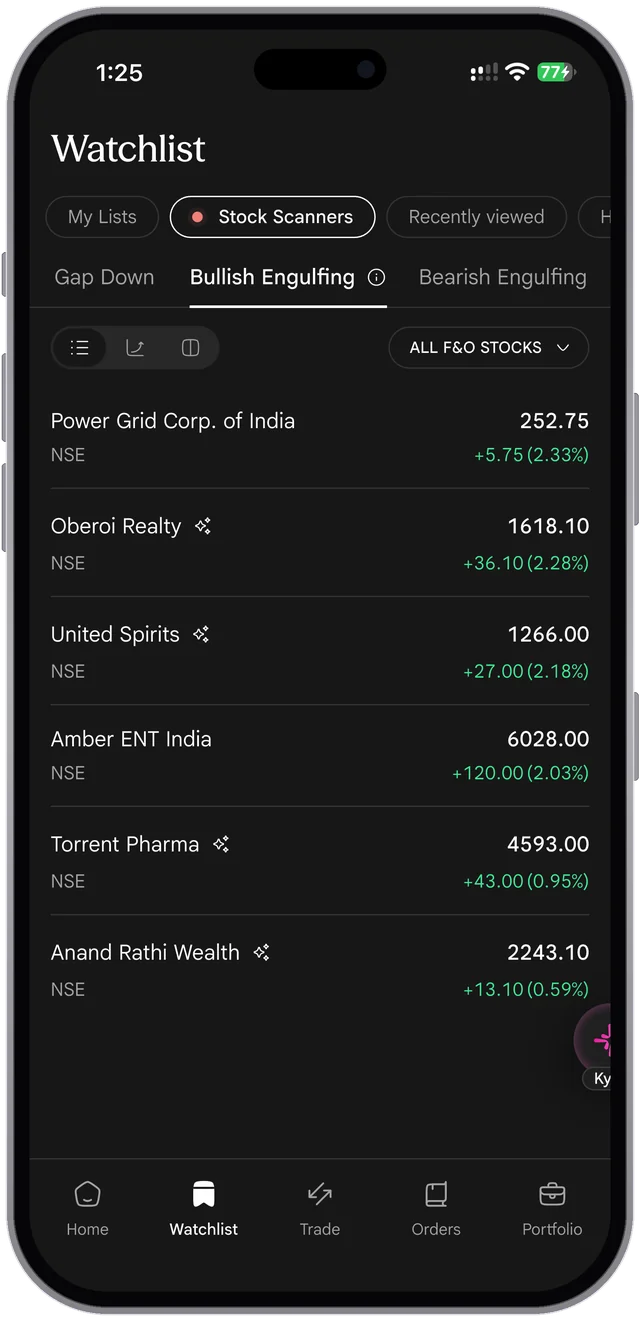

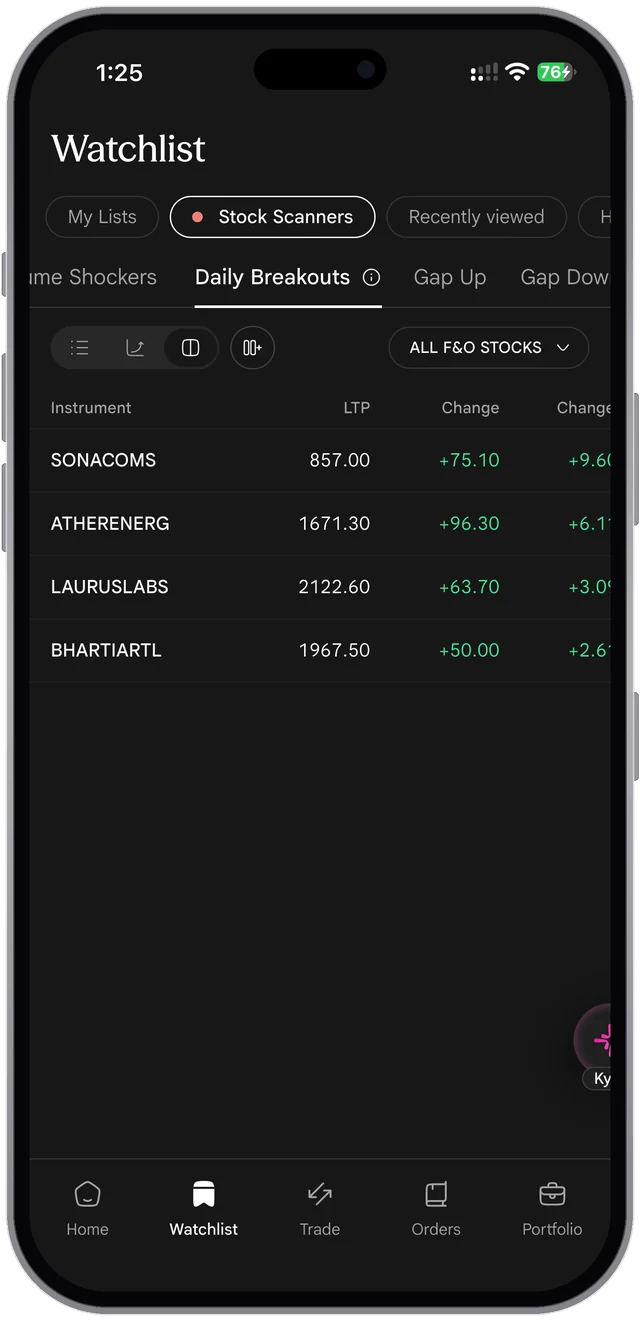

Stock Scanners sits in your watchlist. Losers, Volume Shockers, Gap Up and Stocks in news run beside Gainers, and you choose which stocks a scanner covers and how it shows them.
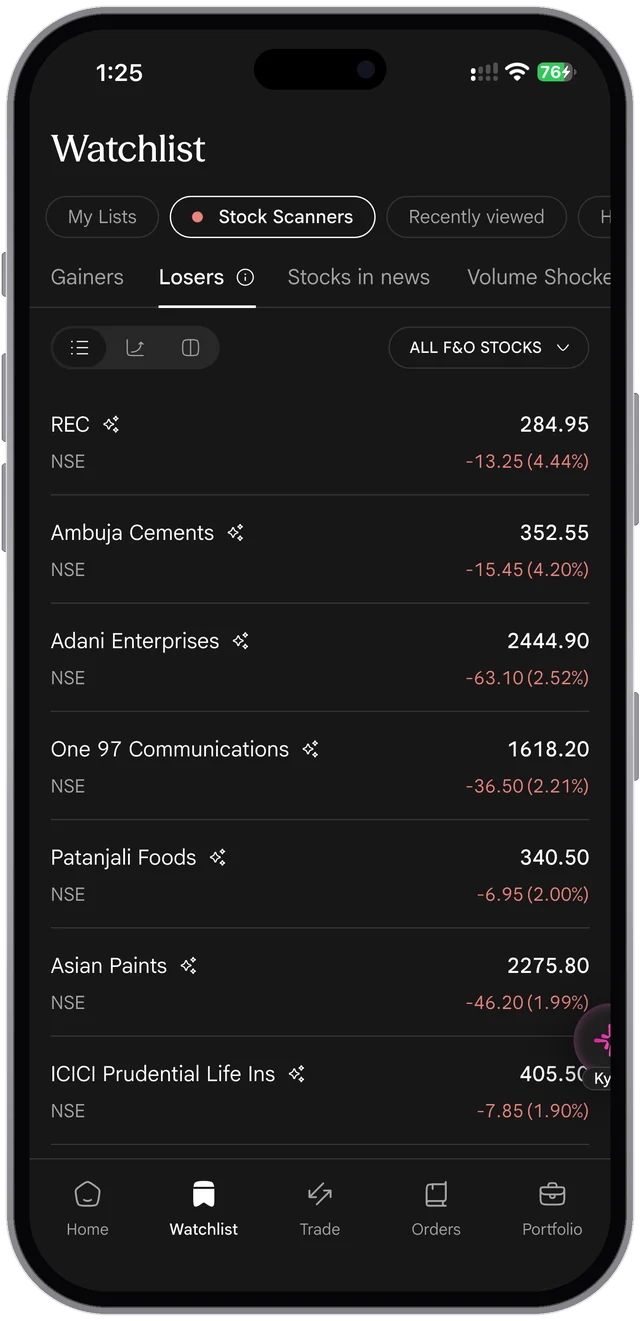
The day's top losing stocks, with price and change.
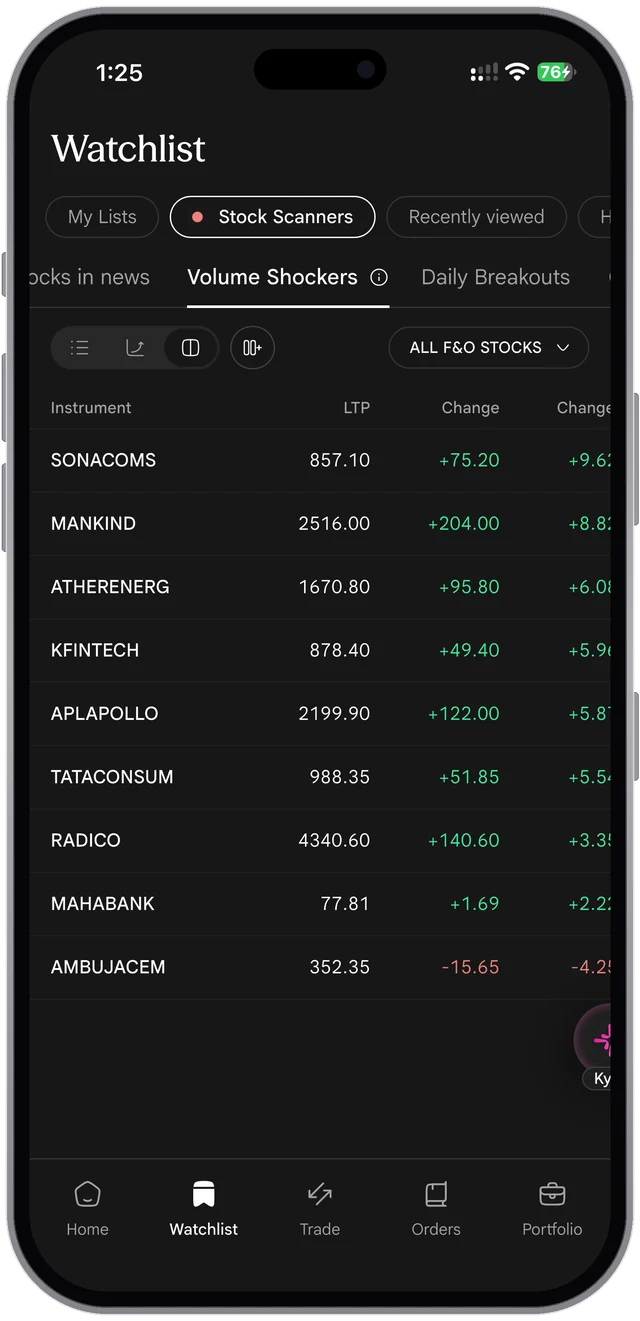
Sudden volume spikes, here as a table.
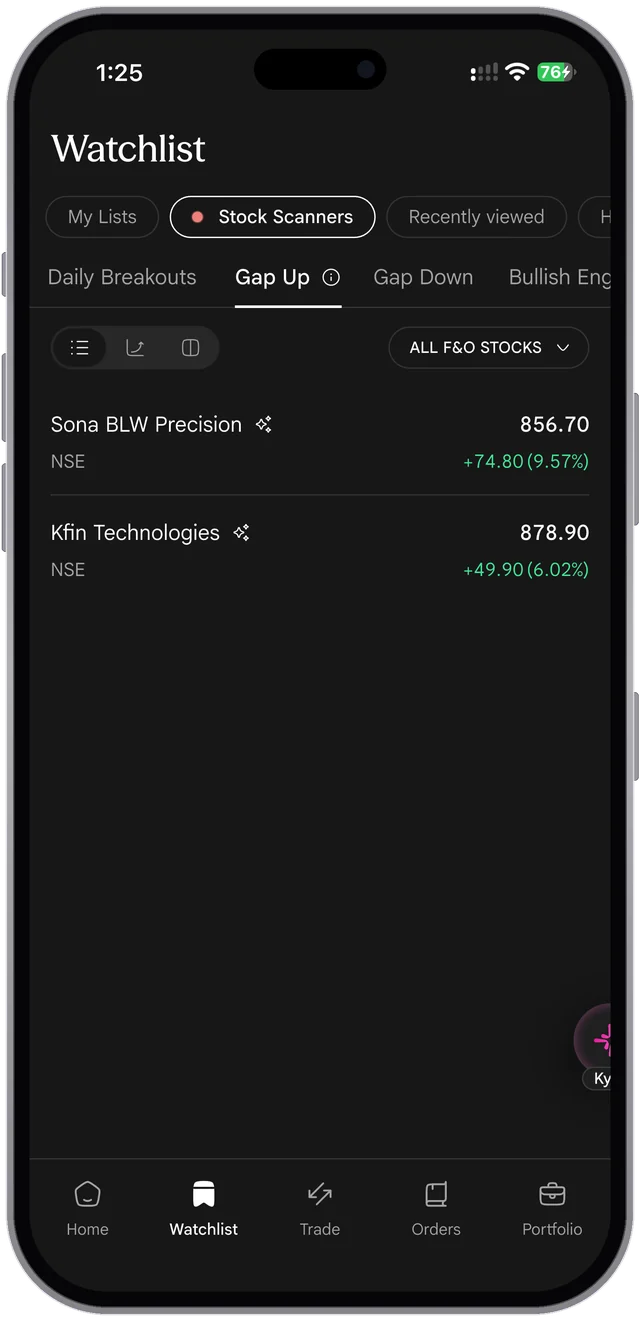
Stocks that opened above the previous day's close.
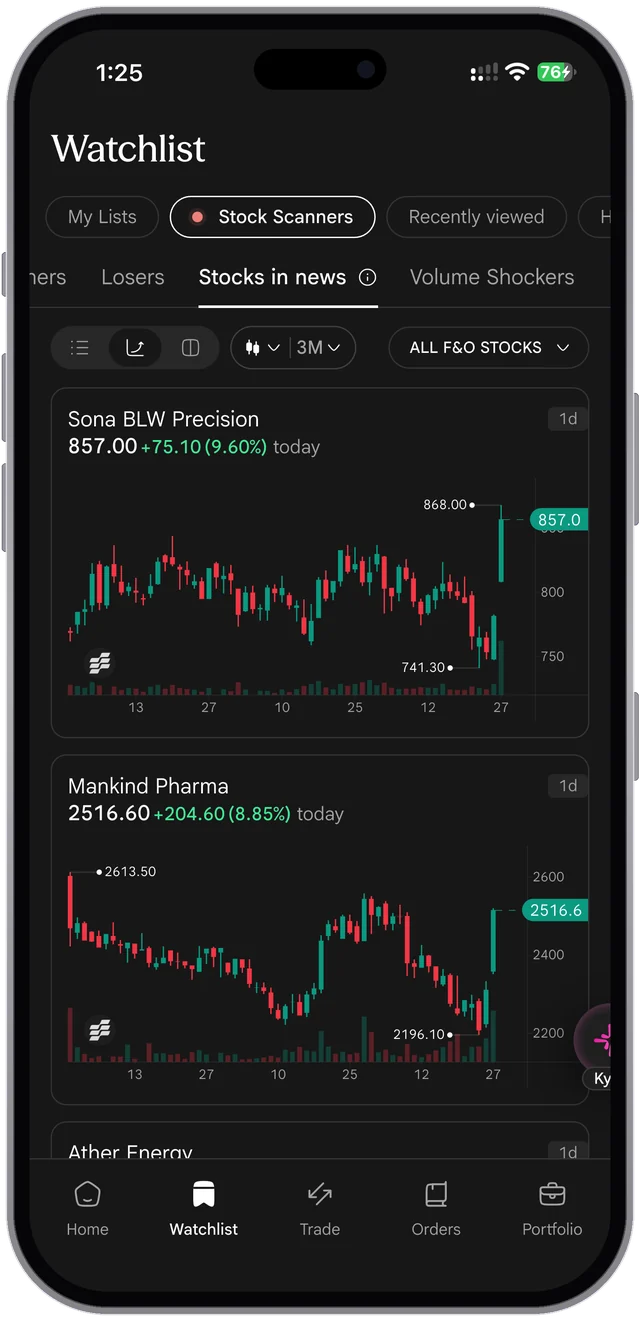
Stocks in the news today, each with its chart.
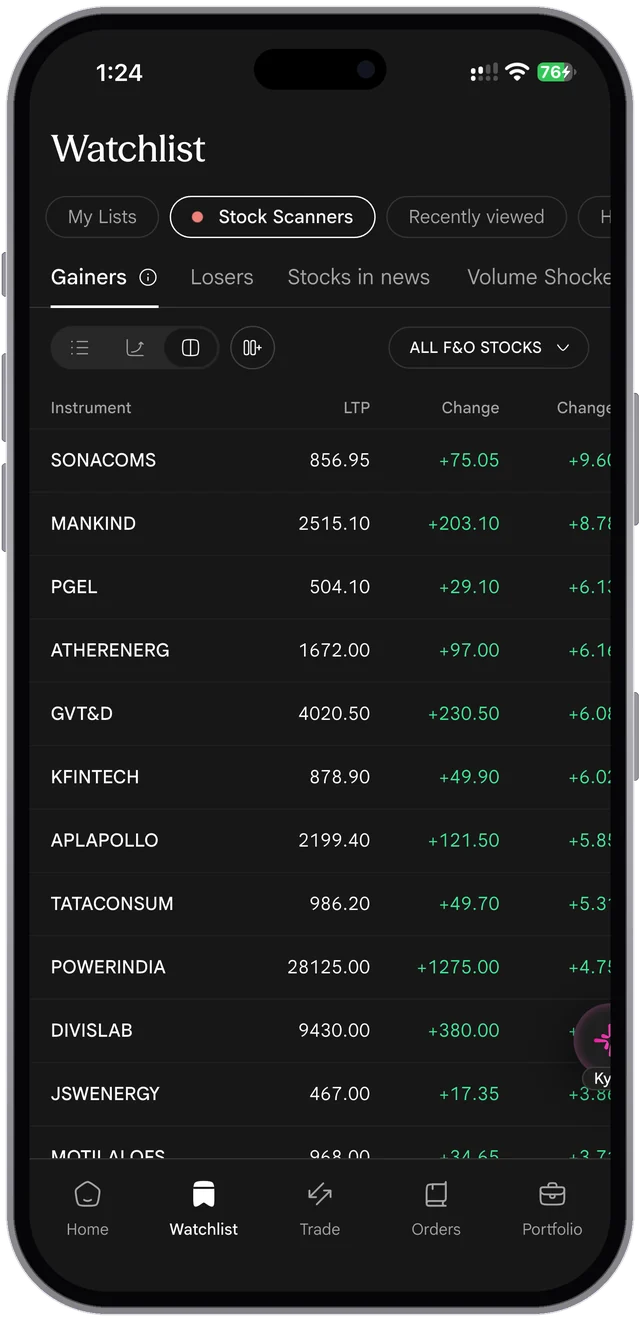
Read a scanner as a table: LTP, change and change %.
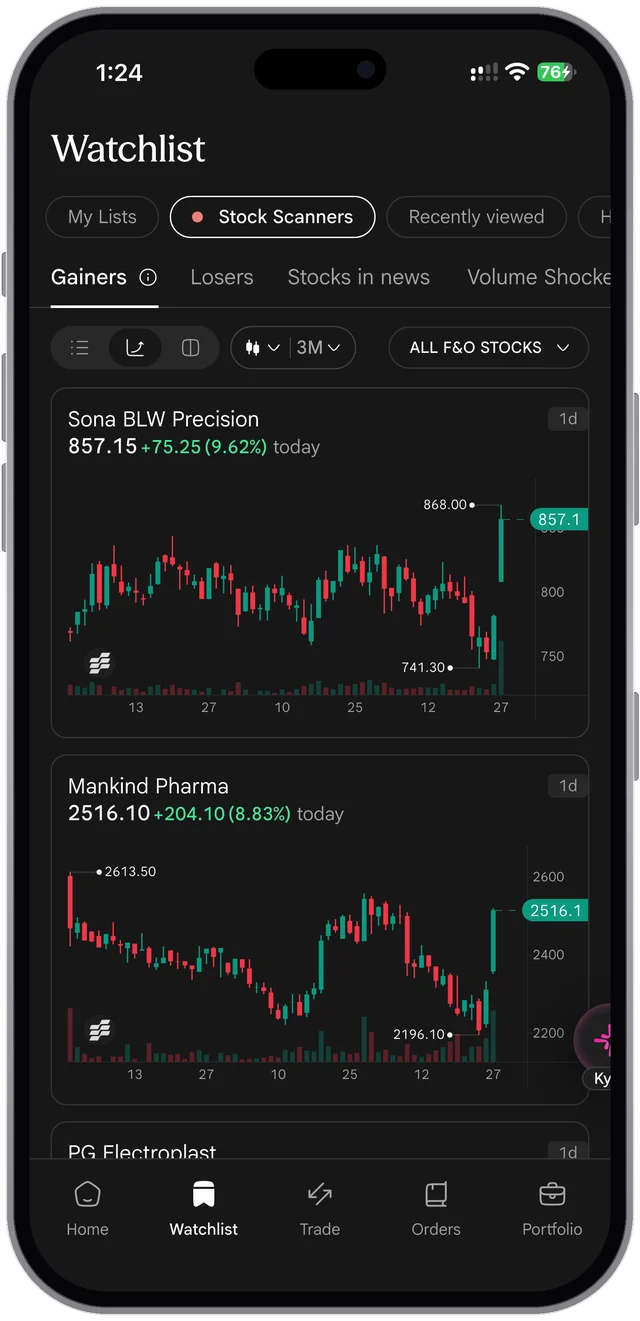
Or as a candle chart for every stock on the list.
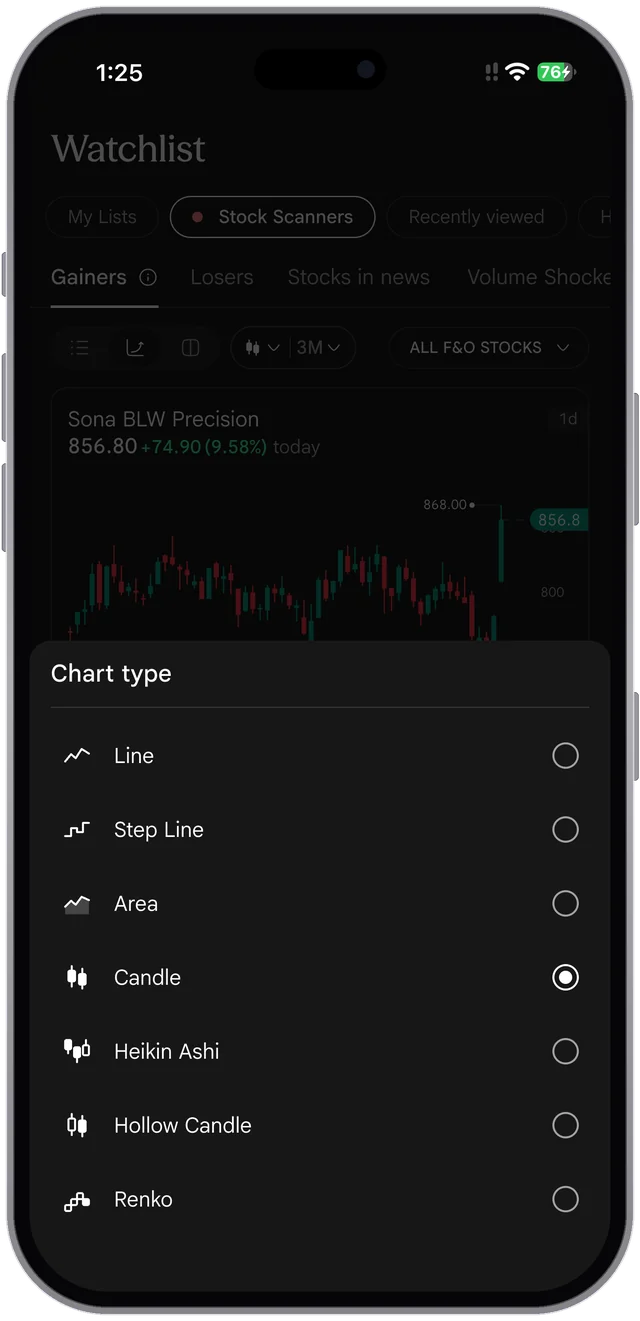
Line, area, candle, Heikin Ashi, hollow candle or Renko, for every chart on the list.
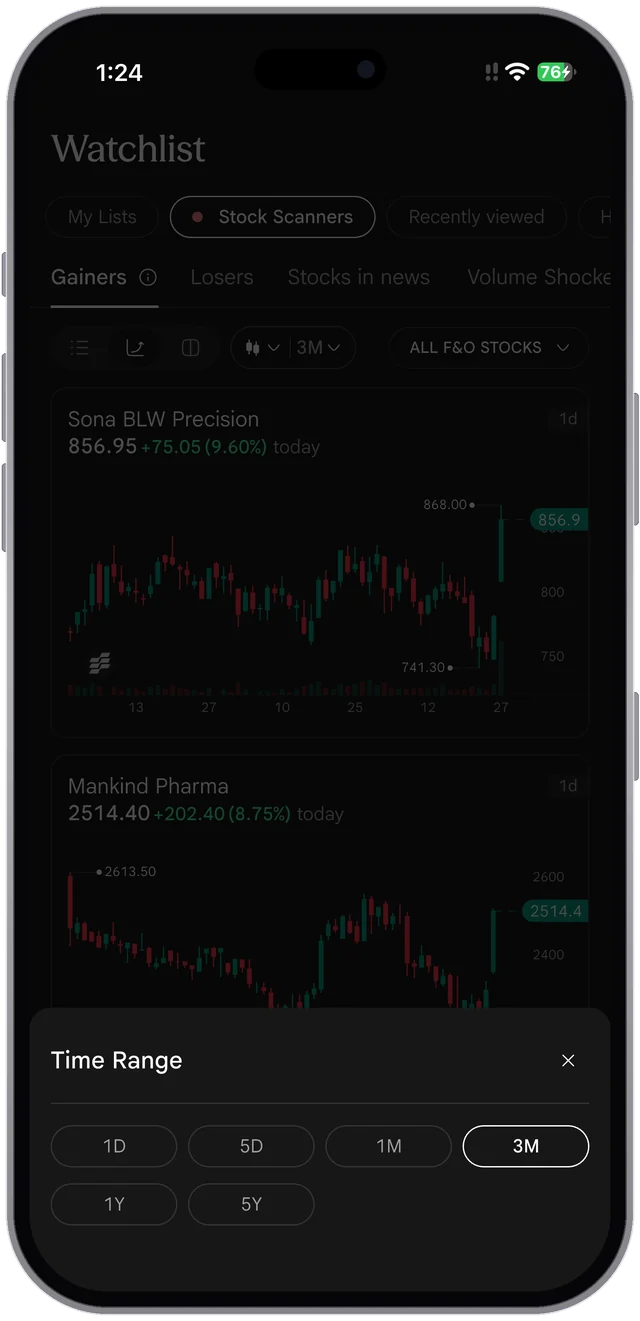
From one day to five years, for every chart on the list at once.
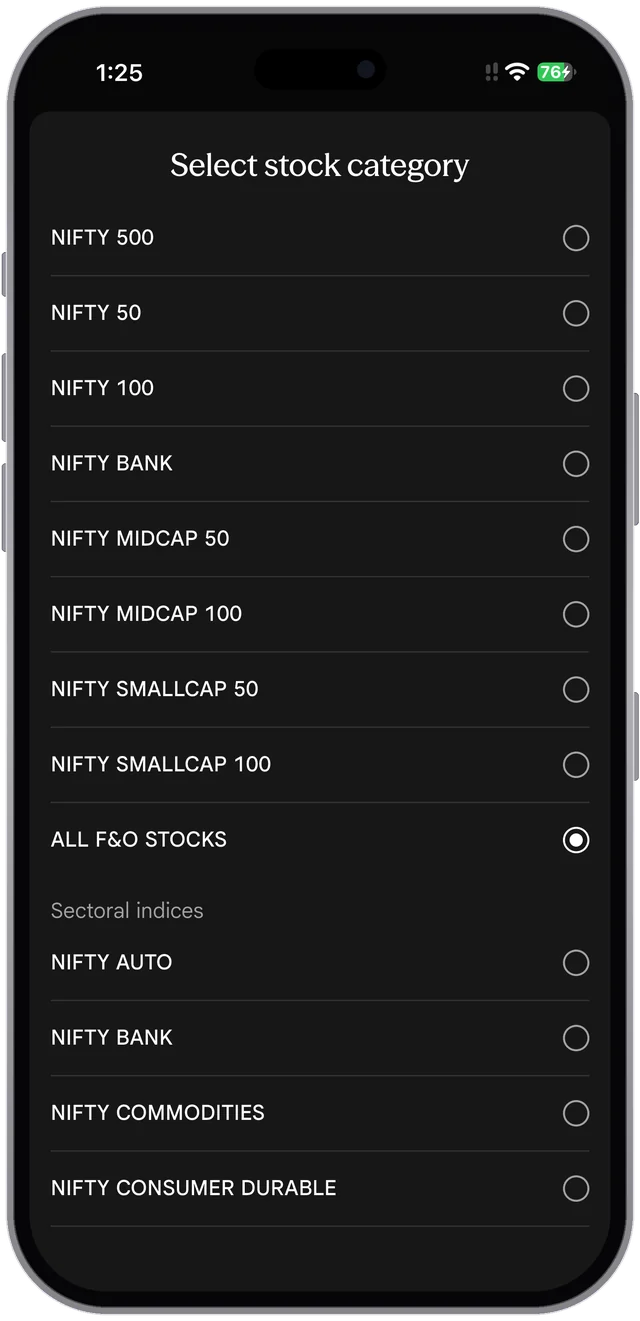
Scan NIFTY 500, NIFTY 50, all F&O stocks or a sectoral index.
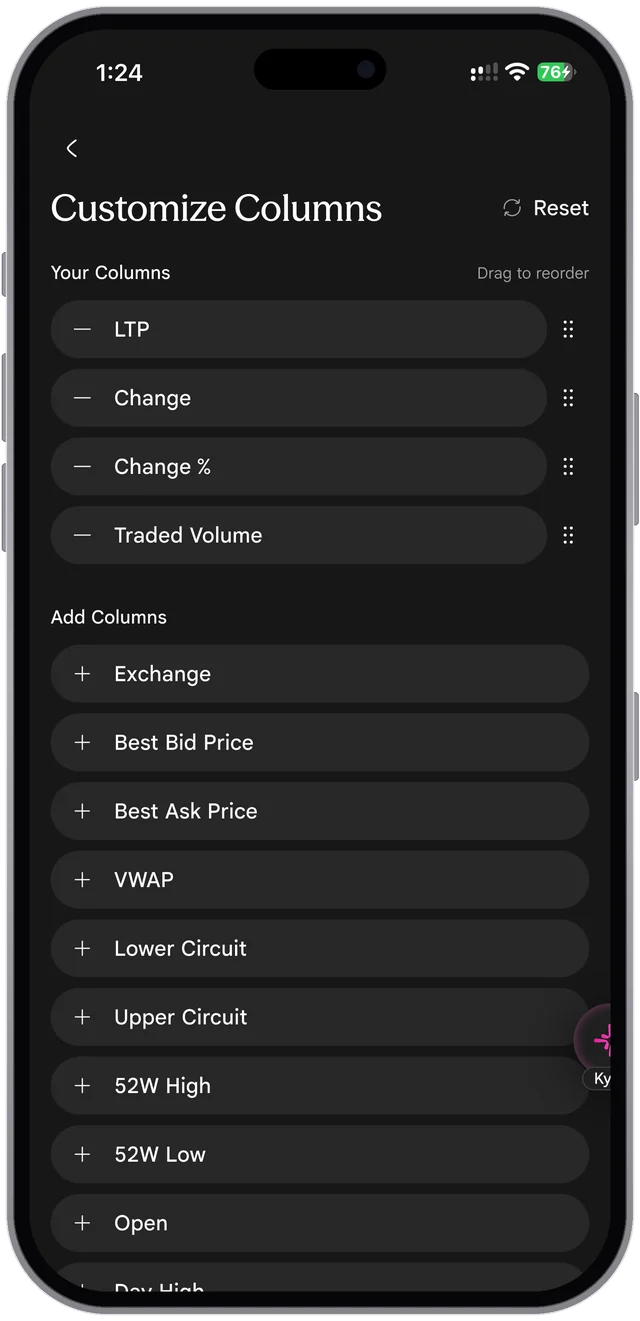
Pick and order the columns: VWAP, circuits, the 52-week high and low and more.
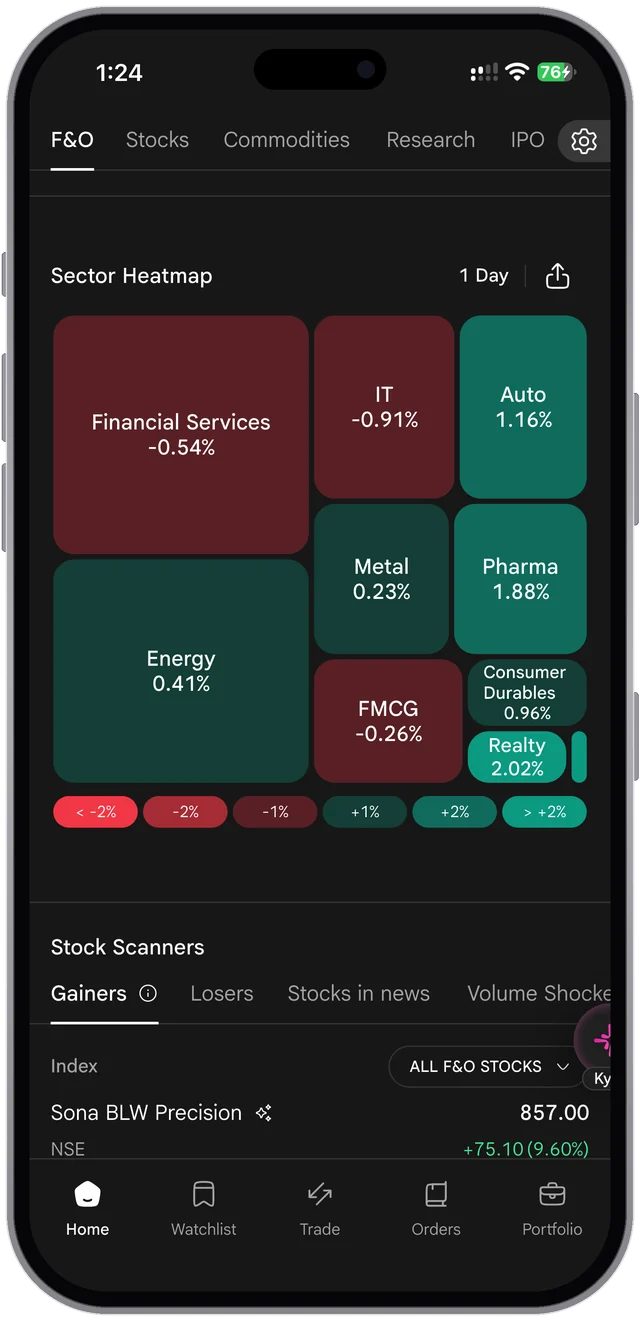
Stock Scanners sits under the Sector Heatmap.
SAHI Charts put seconds and minutes charts, indicators and your order presets on one screen, so you can pick your next stock idea and trade or invest from the chart itself.

Chart, order pad, positions and live P&L sit on one screen. You read the move and place the trade in the same view, without switching tabs or losing the candle you were watching.
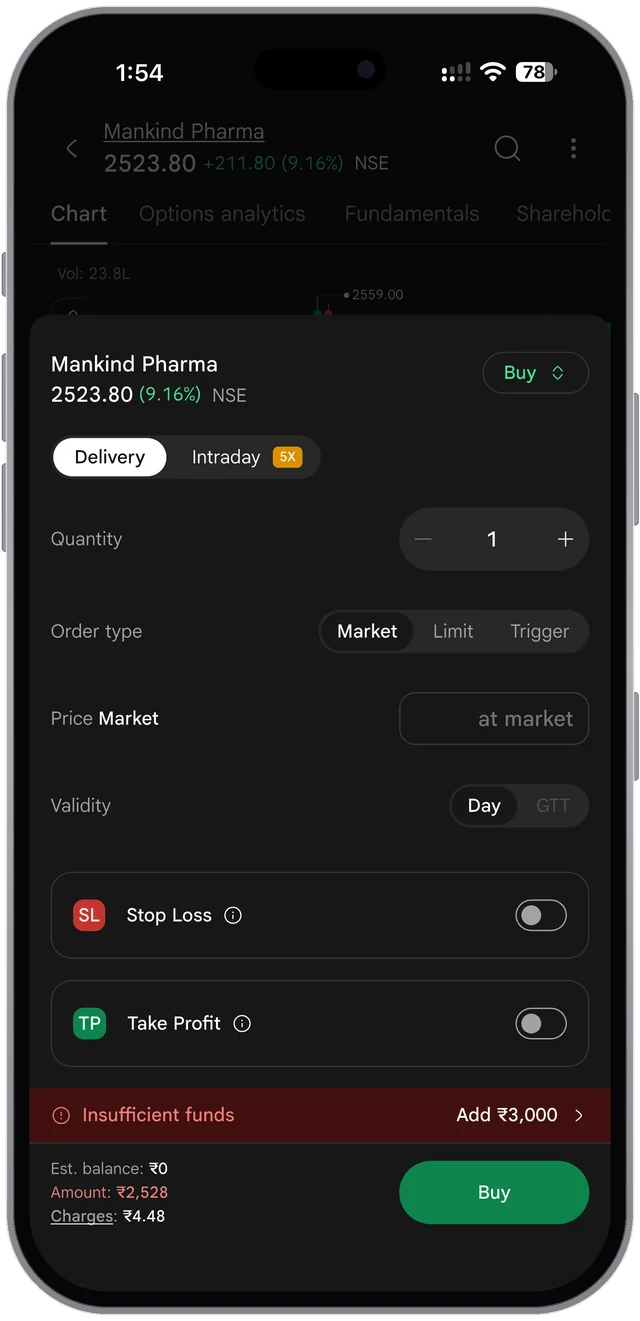
Choose market for an immediate fill or limit for your price. Both are 1-Tap from the chart, with quantity and product type already set to your saved defaults.
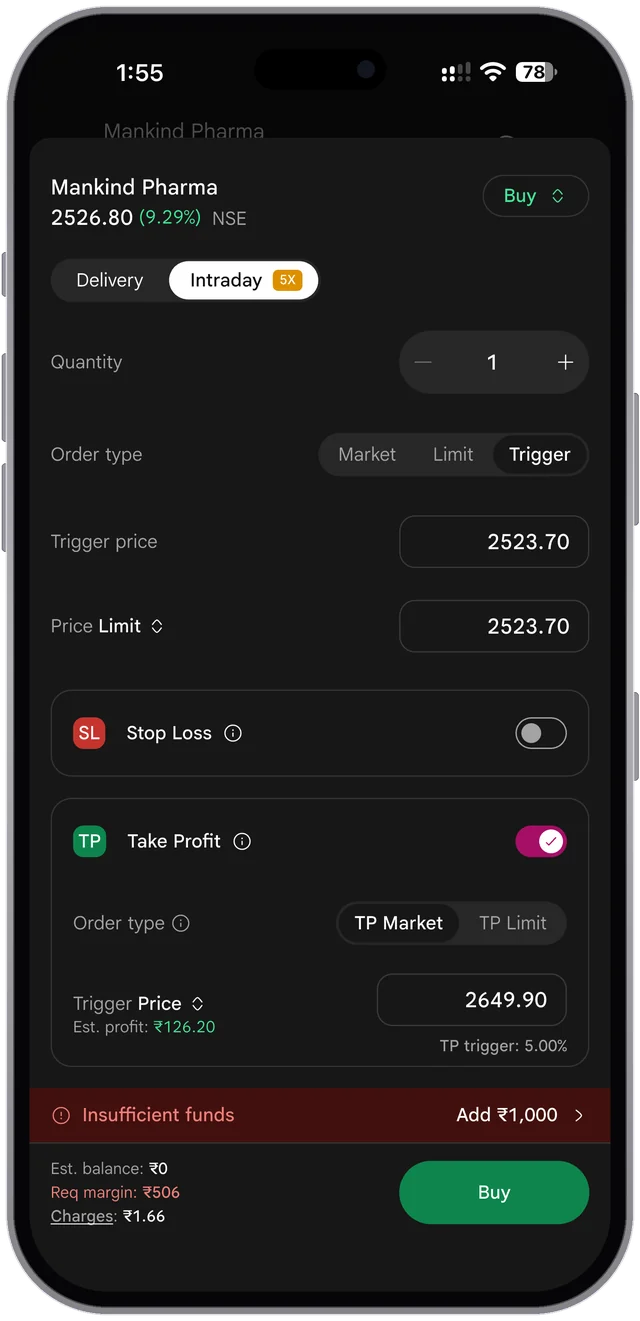
Switch to Intraday for up to 5X leverage, and set the Stop Loss or Take Profit on the order itself. The app shows the trigger as a price and a percentage, and the estimated profit, before you buy.

Place a stop loss and target by dragging them to the level you want on the chart. The price updates as you drag, so you set protection at a level you can see rather than a number you type on a separate order form.

See profit and loss for each individual trade, not just the day's total. When you have added to a position in stages, you know which entry is working and which is not.

Set a trailing level once and the stop loss moves up as the price rises, holding the gains you have made. It stays put when the price falls back, so your downside stays where you set it.
Intraday losses build fastest. Two switches in the SAHI app stop a bad day before it grows.
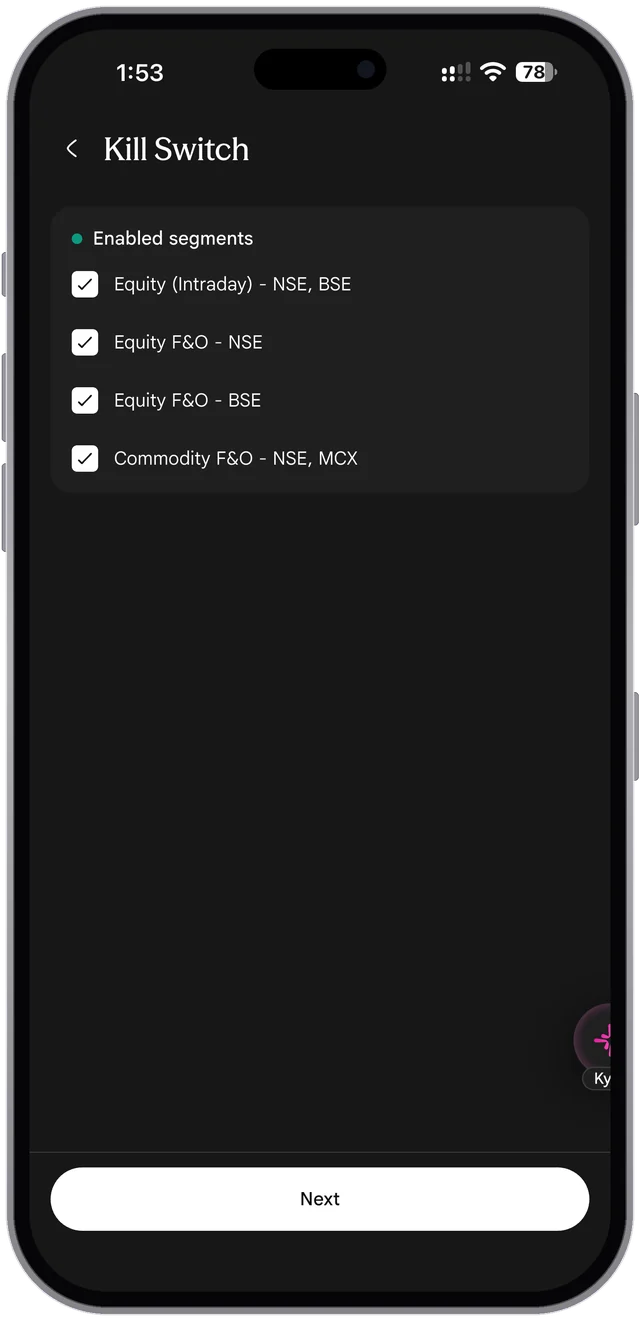
Stop trading in the segments you choose, intraday equity included, for 30 minutes, an hour, three hours or until 11:59 tonight. Once it is on, it cannot be reversed.

Set a stop on the day’s total P&L, for example exit everything below −₹500, with a trailing stop and a target if you want them.
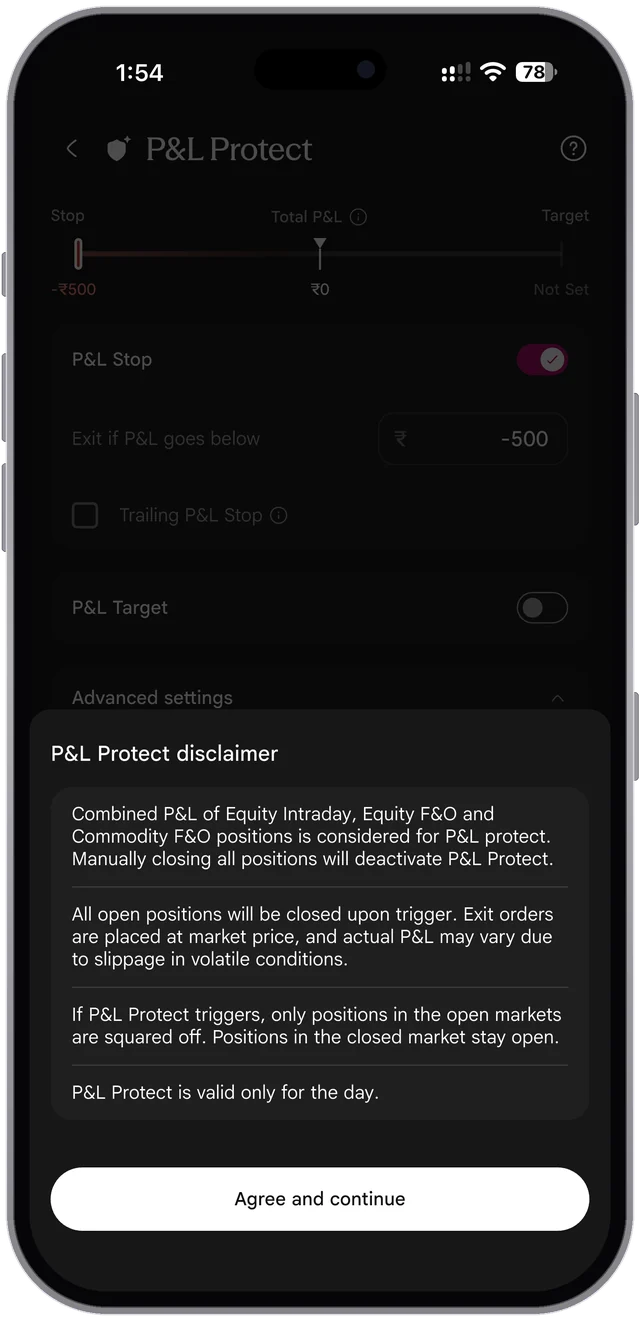
P&L Protect adds up equity intraday, equity F&O and commodity F&O, exits at market price, and lasts only for the day. The app says so before you switch it on.
Trade on your terms, even when you’re away from the screen.
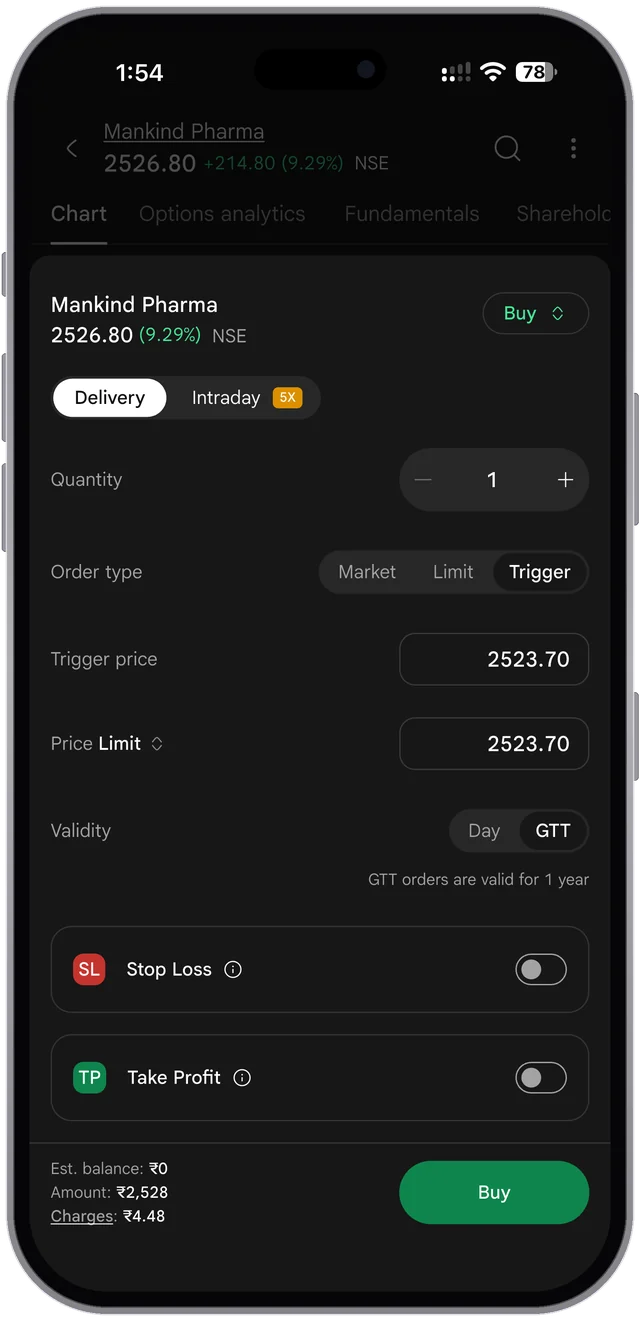
SAHI supports Good-Till-Triggered (GTT) orders, valid for up to a year, so you never miss your ideal entry or exit levels. Set your trigger once and SAHI places your limit order when the price is hit.
Open a demat and trading account with a SEBI-registered broker, complete KYC, add funds, and place your first order. The demat account holds your shares and the trading account executes buy and sell orders. With SAHI you can open an account in the app and trade at a flat fee per order.
A demat account stores your shares in electronic form, while a trading account is used to place buy and sell orders on the exchange. You need both: the trading account executes the deal and the demat account holds the delivered shares. They are usually opened together.
There is no fixed minimum; you can buy a single share worth a few rupees. In practice many start with a few thousand rupees to diversify and cover costs. SAHI charges a flat fee per executed order, so small orders are not eaten up by percentage-based brokerage.
A GTT (Good-Till-Triggered) order lets you set a trigger price so a buy or sell order is placed automatically when the stock reaches it, without watching the screen. SAHI supports GTT orders valid for up to one year, which is useful for setting target and stop-loss levels in advance.
A GTC (Good-Till-Cancelled) order stays live on the exchange until it executes or you cancel it. Indian exchanges do not offer true GTC orders in the cash market, so brokers offer GTT instead: your trigger price is held for you, and the order goes to the exchange only when the price is hit. On SAHI a GTT stays valid for up to one year.
Traders look for liquid, volatile stocks with a clear news or technical setup, often large caps and index constituents. SAHI includes 20+ real-time scanners, such as gainers and losers, RSI overbought and oversold, and moving-average crossovers, plus a Buzzing Stocks feed for volume spikes and breakouts.
For most beginners it is not. SEBI’s study of the 2022-23 financial year found that about 7 in 10 individual intraday traders in the cash market made a loss. Success depends on a tested strategy, stop losses and controlling costs. Flat per-order pricing keeps frequent trading affordable, but it does not remove the risk.
Intraday equity gains are speculative business income, taxed at your income-tax slab rate. Shares bought for delivery and sold within a year are short-term capital gains, taxed at 20%; held longer than a year, gains above ₹1.25 lakh in a financial year are taxed at 12.5% (rates from 23 July 2024). Speculative losses can only be set off against speculative gains. This is general information, not tax advice.
Pay only ₹10 per executed order and save 50% more than other platforms.
Account opening
AMC charges
Brokerage charges per order