


60% faster charts. Double the view.
Real-time charts, exclusive indicators, and Nifty + option charts side by side.
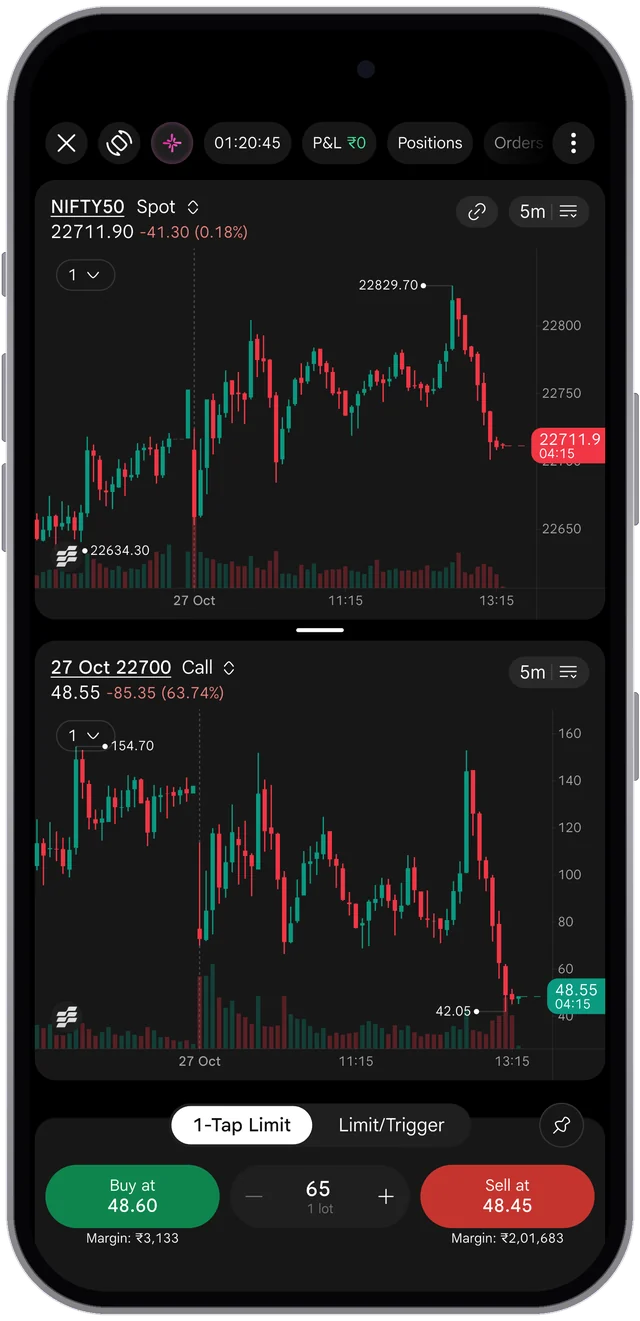
Built for options buyers who need speed at execution. SAHI's charts update in real time, orders go in 1-Tap, and AI monitors market conditions between your entries.
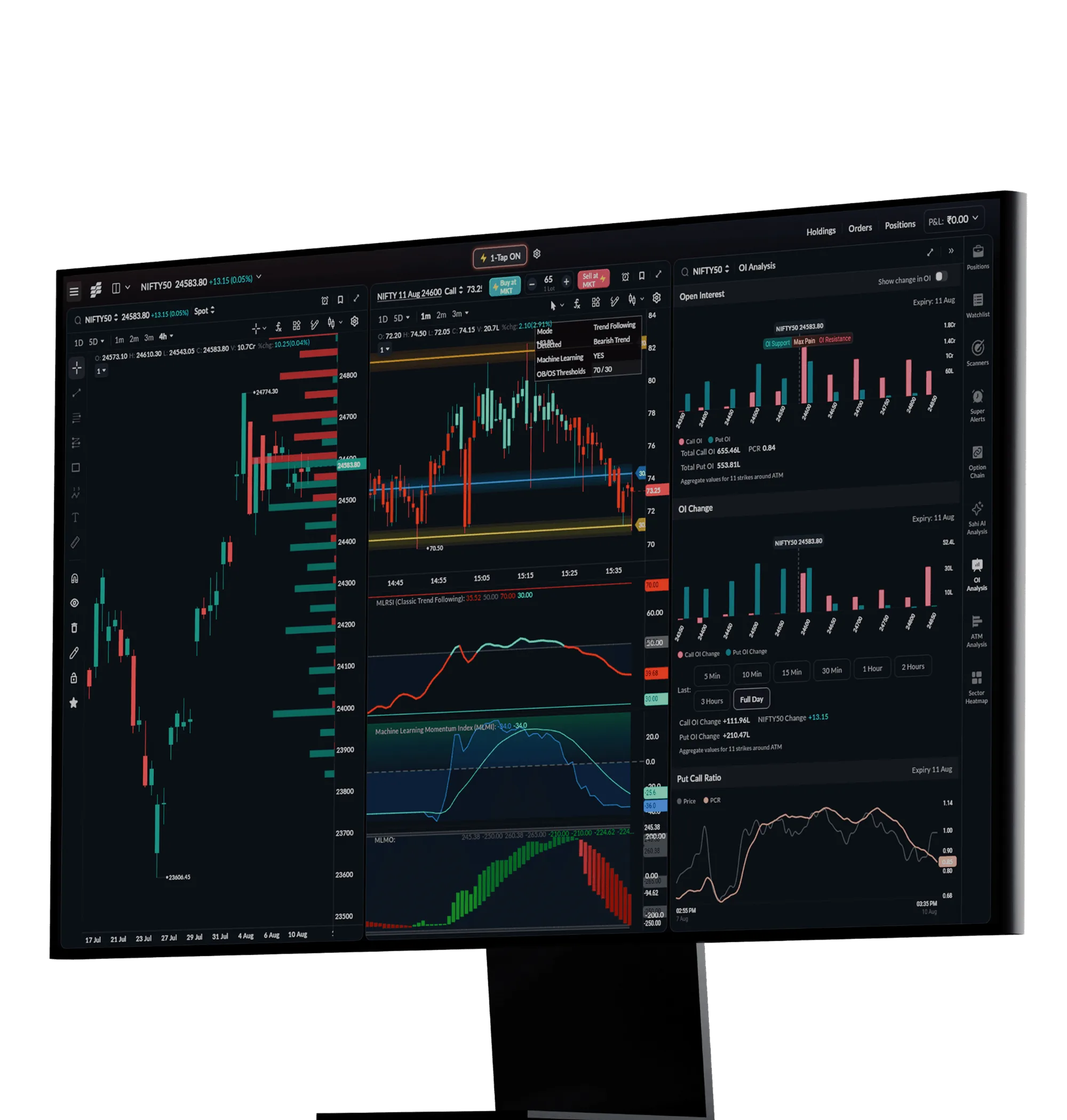
Real-time charts, exclusive indicators, and Nifty + option charts side by side.

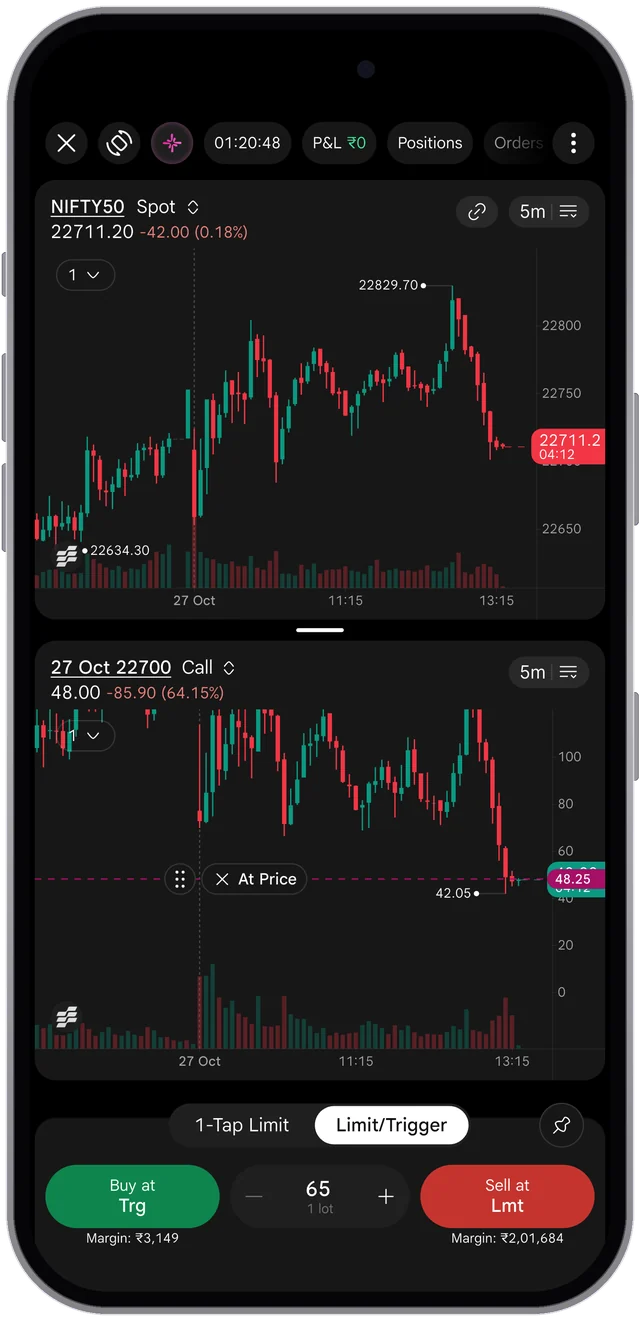
Limit orders placed in a single tap. No slippage with price during volatile moves.

Your workspace, your way. Set up charts, indicators, and order preferences exactly how you like them.


Manage risk, optimise entries and exits, and never miss a movement – all without leaving your chart.
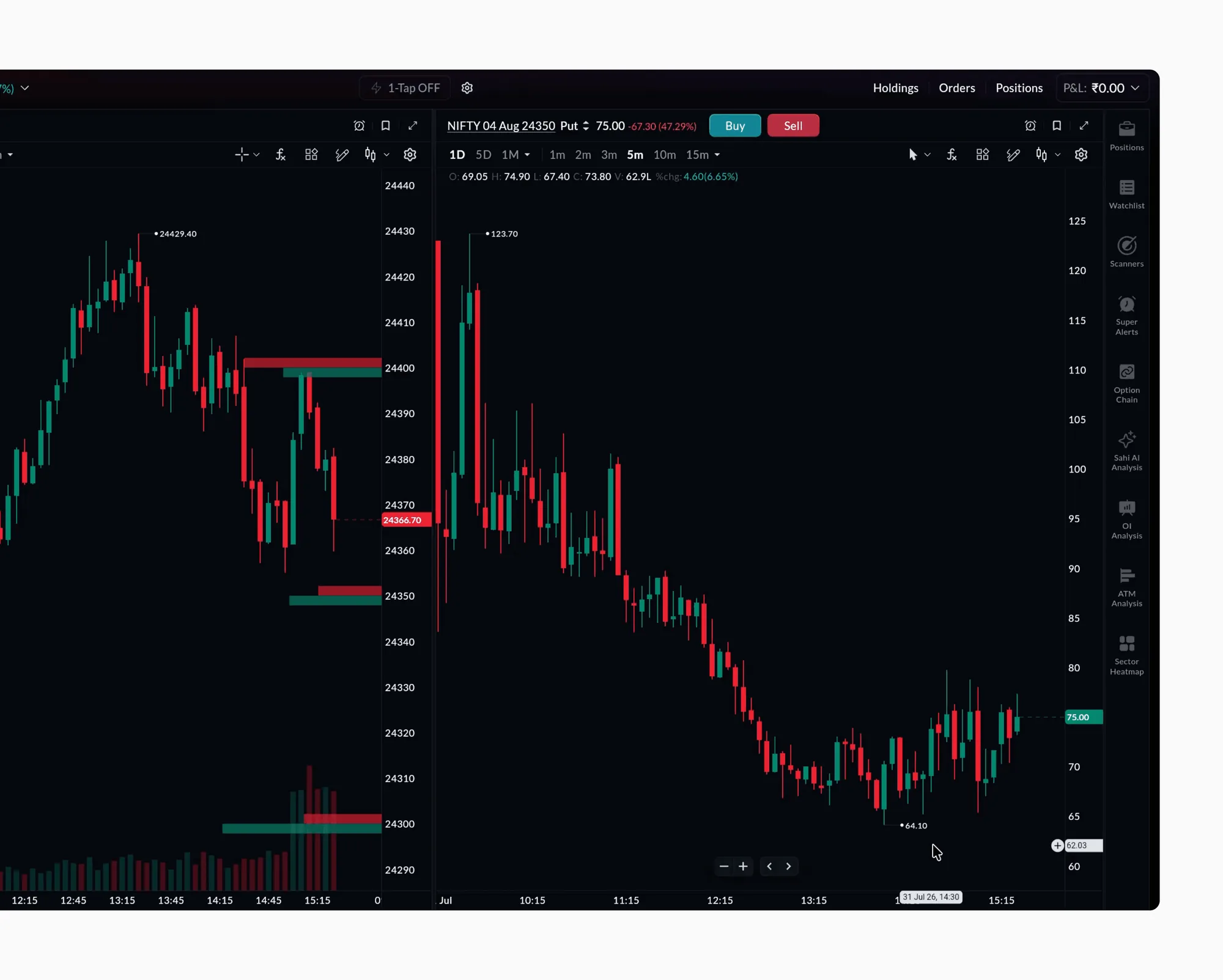
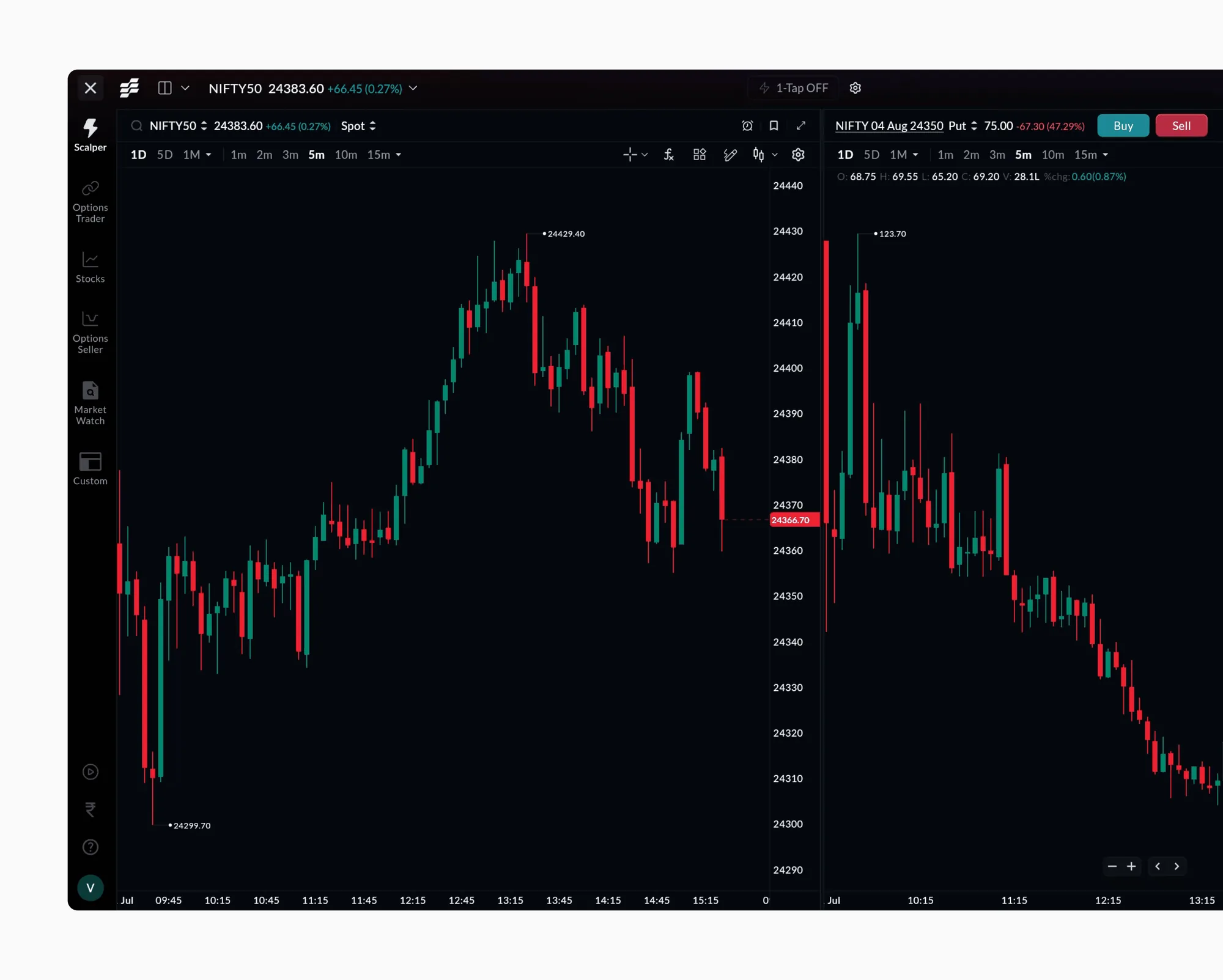
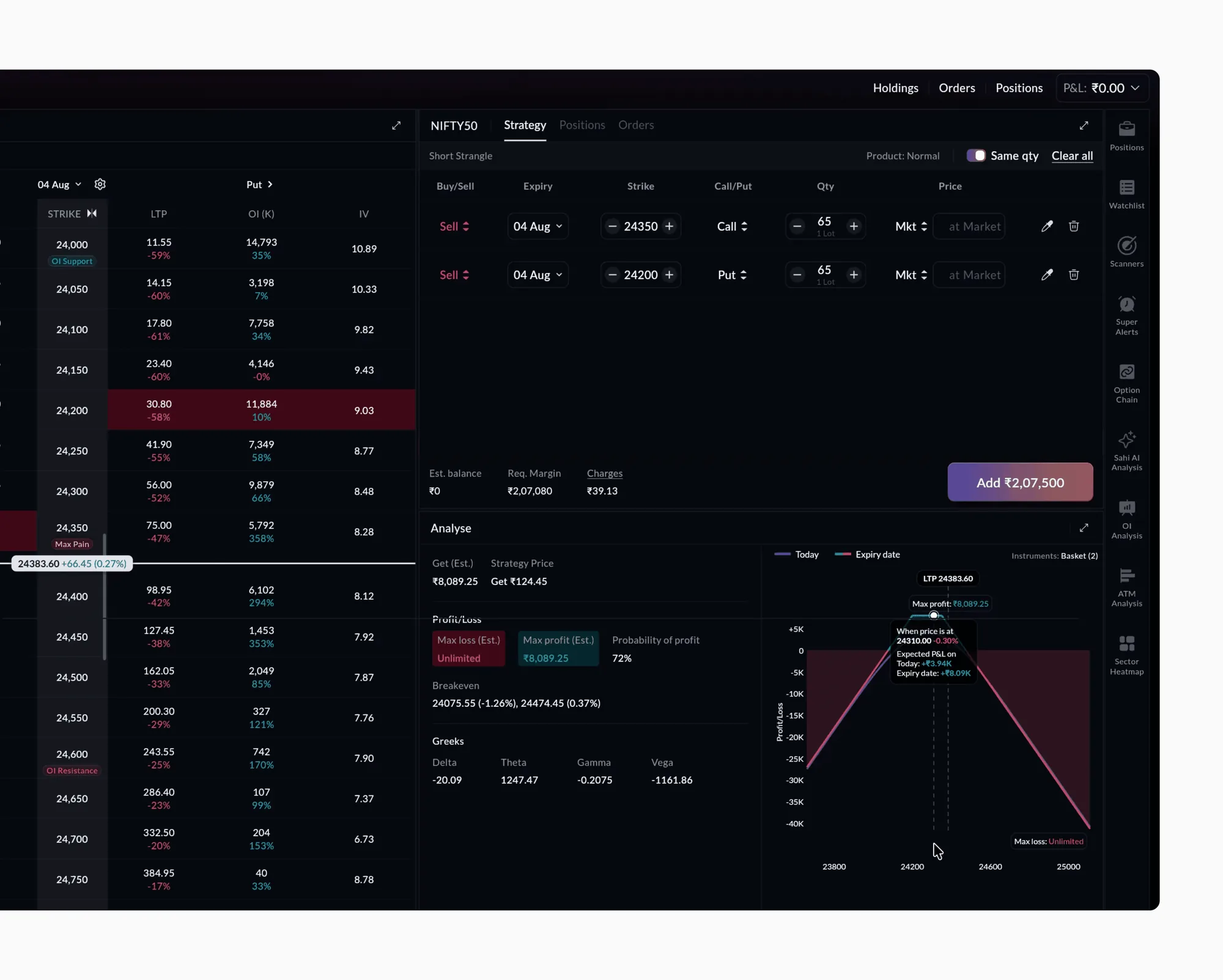
Place market and limit orders from the chart while keeping execution close to the setup that triggered it.
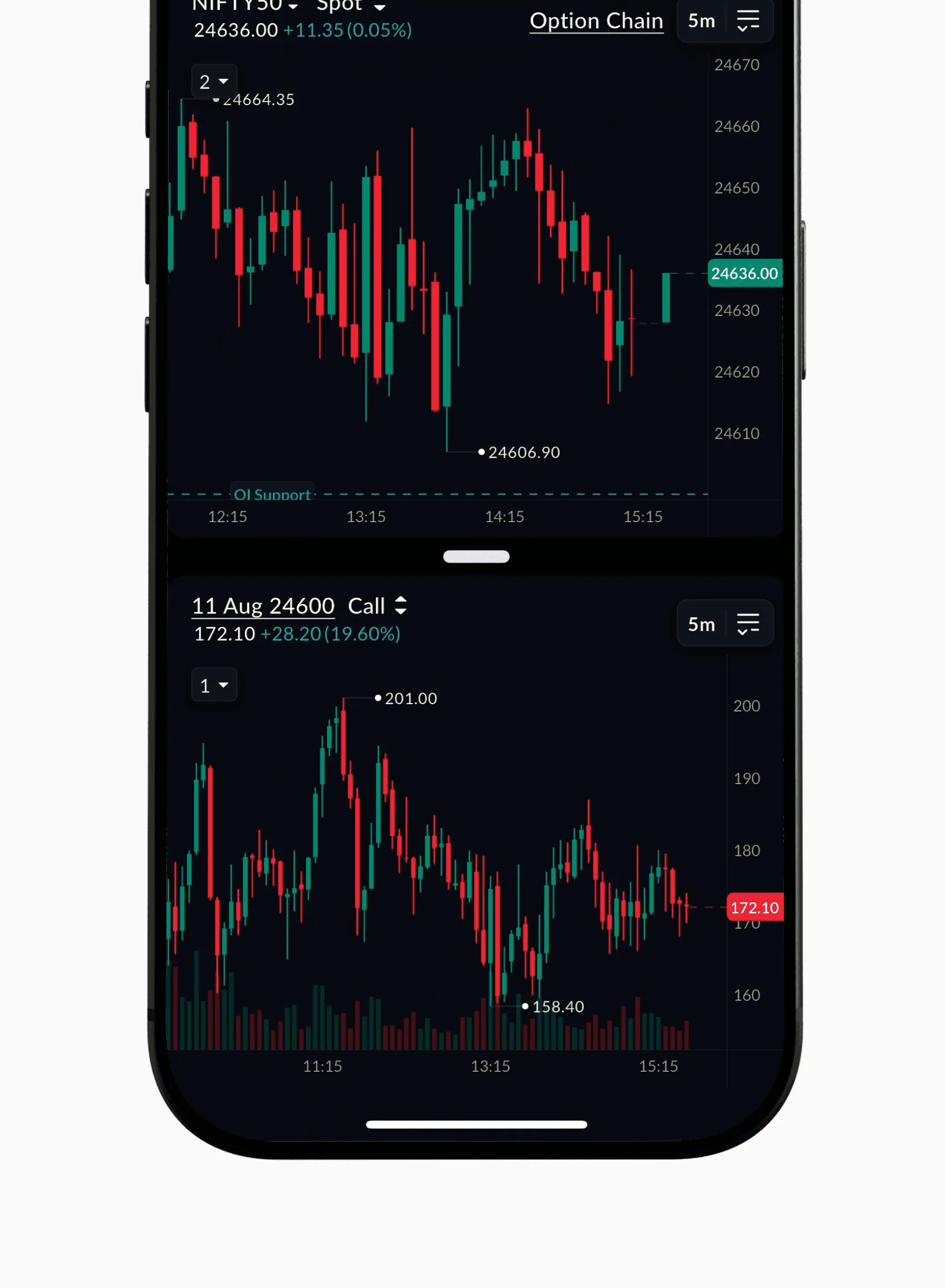
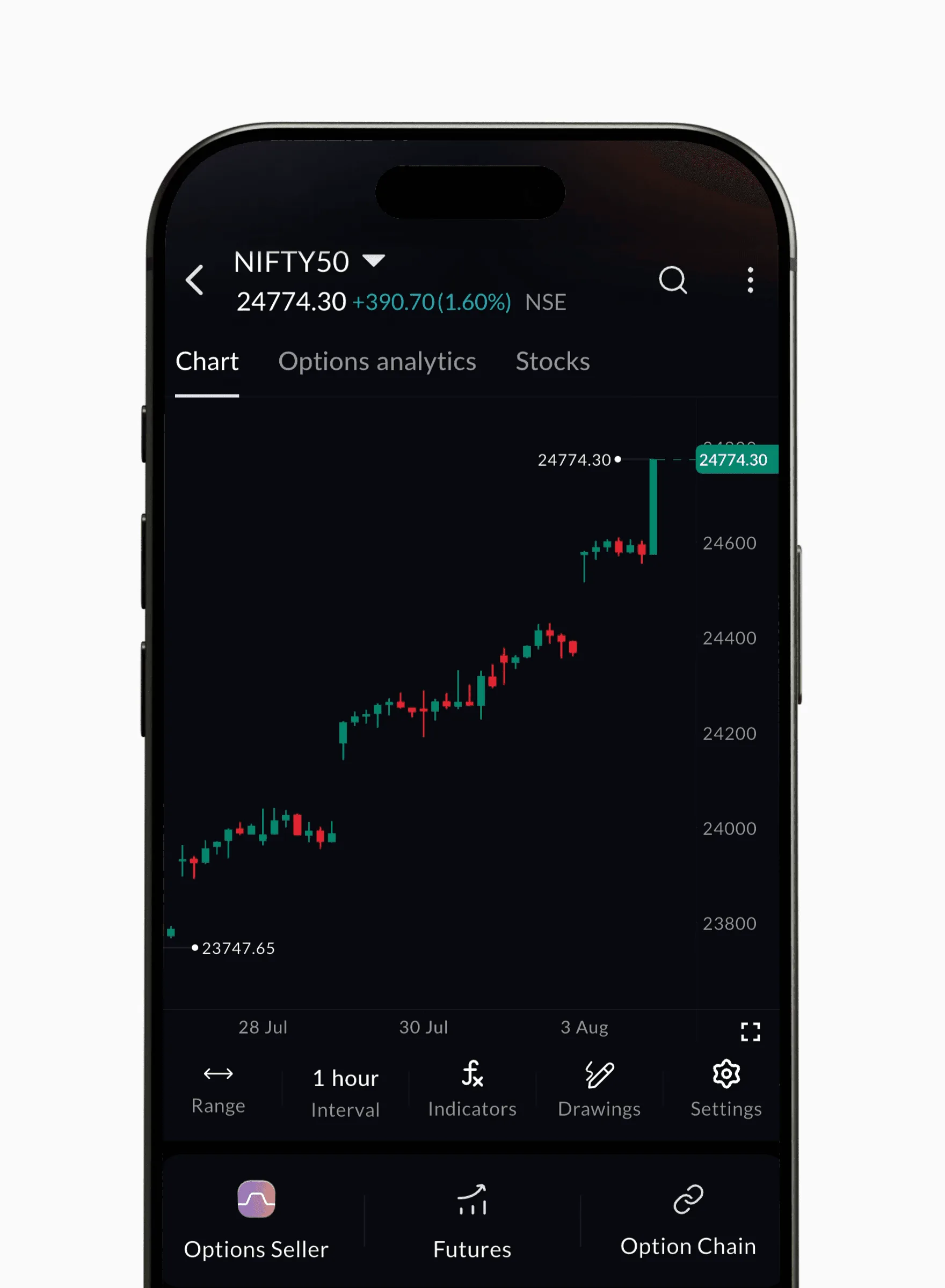
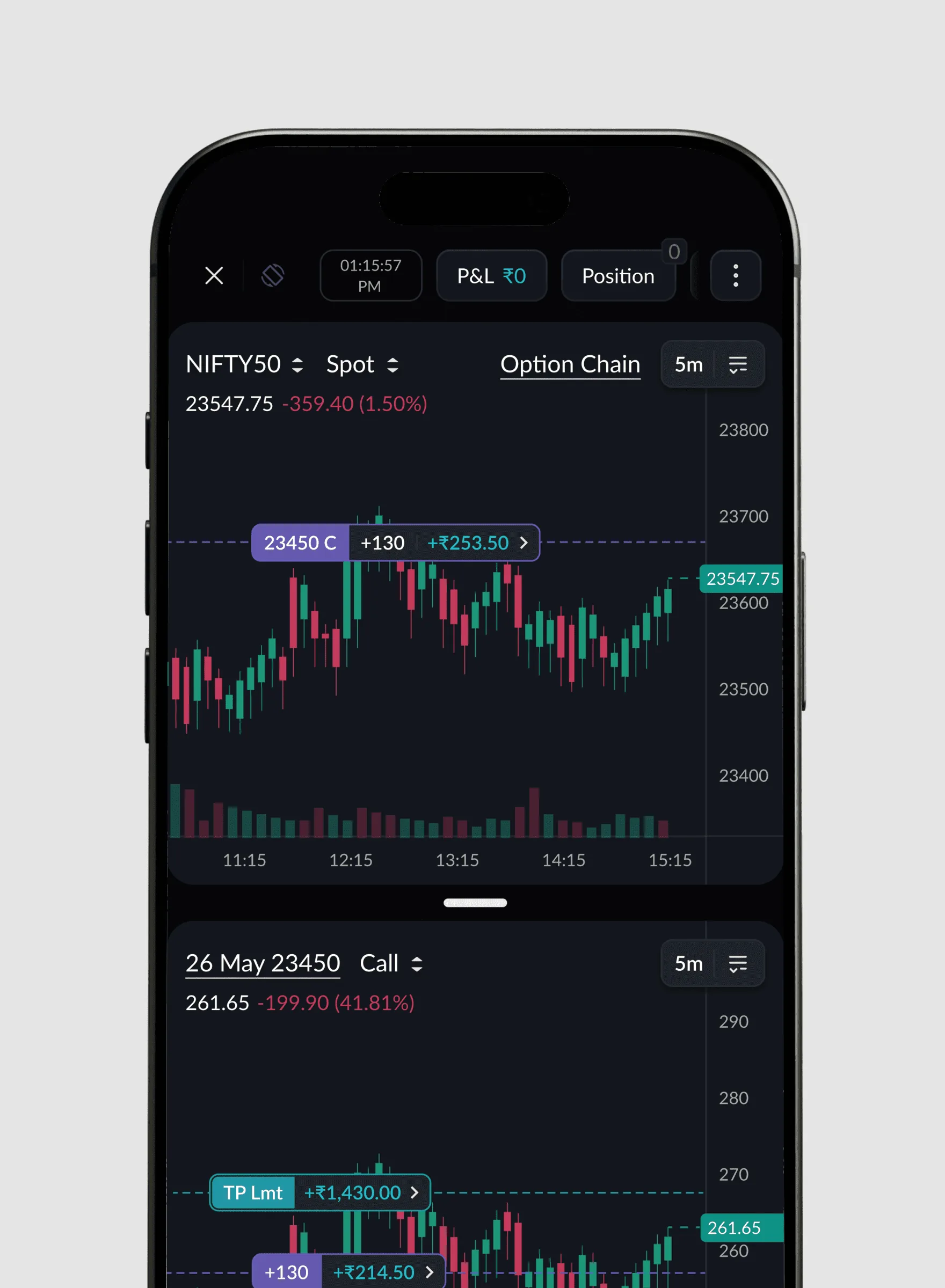
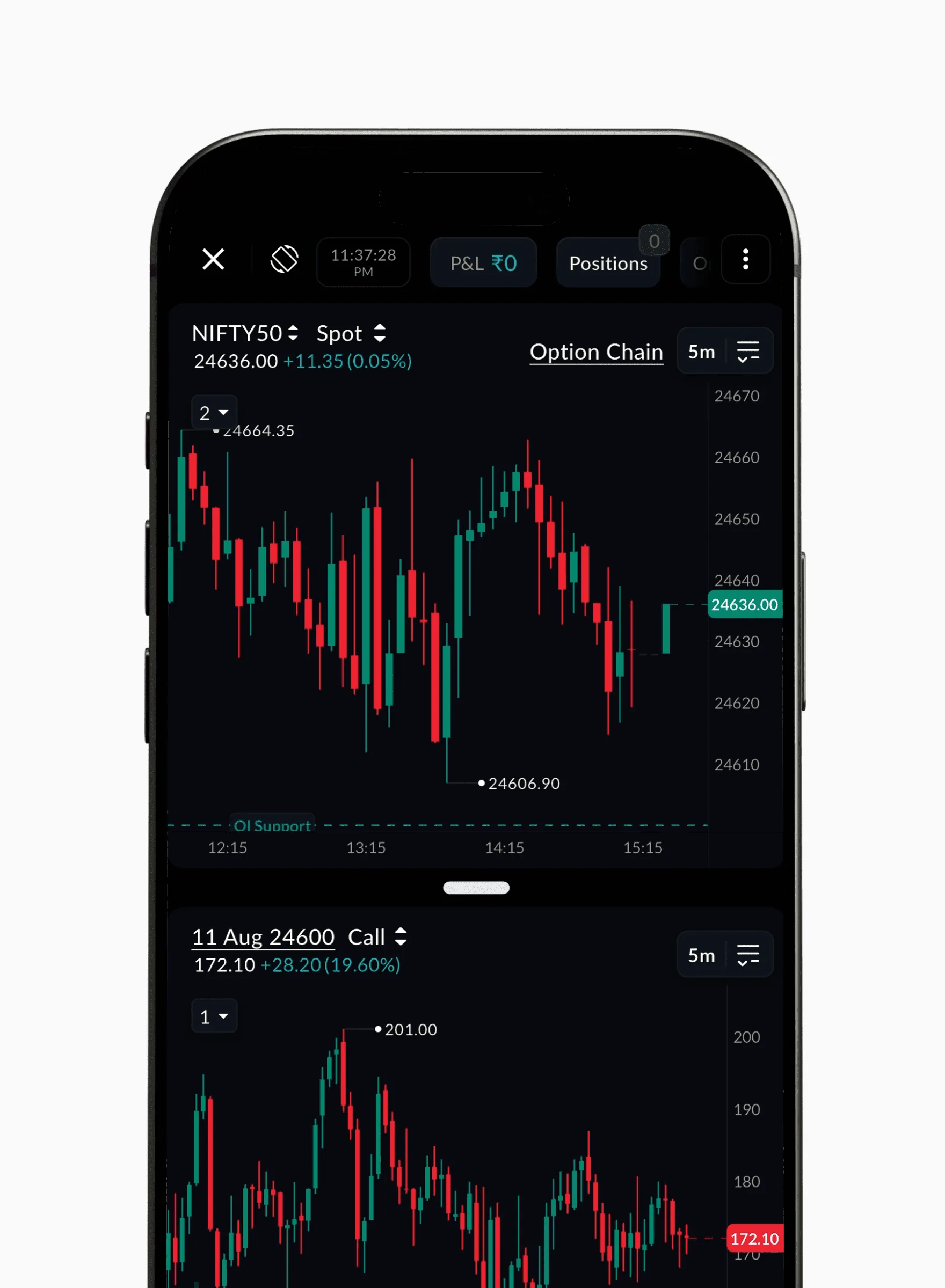
Place market and limit orders from the chart while keeping execution close to the setup that triggered it.


Option buying means paying a premium to buy a call or put, which gives you the right, not the obligation, to buy or sell the underlying at the strike price. Your maximum loss is the premium paid, while gains can be large if the market moves your way. Buyers profit from strong directional moves.
A call option gains value when the underlying rises, and a put option gains value when it falls. You buy a call if you expect the price to go up and a put if you expect it to go down. Both cost a premium, which is the most a buyer can lose.
Most option buyers lose because of time decay: an option loses value every day even when the price does not move against them. Buying overpriced options in high volatility and then facing an IV crush, and holding too long, also hurt. Fast entries and exits with disciplined stop losses reduce the damage.
Buying one lot of a weekly index option often costs a few thousand rupees in premium, which is both the entry cost and the maximum loss. You need enough to take a position and survive a series of losing trades. Buying needs far less margin than selling options.
In-the-money (ITM) options cost more but track the underlying closely, while out-of-the-money (OTM) options are cheap but lose value fast and need a big move. At-the-money (ATM) sits in between and is common for intraday. The right choice depends on your conviction and time horizon.
Theta is the amount an option loses in value each day purely from time passing, with other factors held equal. It speeds up close to expiry and works against option buyers. This is why buyers aim to be right quickly rather than holding a losing option and hoping it recovers.
Many buyers focus on the first hour after the open, when volatility and volume are highest, and again in the last hour. Mid-session tends to be quieter, and a quiet market lets time decay eat into the premium without a move to offset it. Fast charts and one-tap execution help capture the quick moves these windows can offer.
Option buying profits are non-speculative business income, taxed at your slab rate and reported in ITR-3. You also pay STT on the sell side, brokerage, exchange fees, GST and stamp duty. If a bought option is left to expire in the money, STT is charged on its settlement value instead, which can cost more than squaring it off before expiry. SAHI’s flat per-order fee keeps brokerage predictable. This is general information, not tax advice.
Pay only ₹10 per executed order and save 50% more than other platforms.
Account opening: ₹0
AMC charges: ₹0
Brokerage charges per order: ₹10